Wednesday, 22 August 2012

Mew, Mates & Malice: The Last Weekend Episode One


Generally, I’m a stand-up guy. I bung my change in the charity tin and I’m liberal about it. I let old women board the train ahead of me, even in rush hour. St. Peter, throw those pearly gates wide. Not even I, though, claim to have made it 21 years without the odd moral mishap. My biggest episode for self-reproach came when I was eight and glued to a Game Boy; my best friend, let’s call him Mark (wounds might still be raw, here) had left me to care for his Pokémon game whilst he went to Tenerife with his parents. For those unacquainted with the Pokémon series (what did you do with your childhoods? Outdoor activities? Get out!), the aim of the game was to capture as many creatures as possible. The most coveted was Mew, who appeared only once in each person’s game in the depths of a dark cave, and whom I myself had blunderingly let evade capture in my own. Mark, at the time, had been prodigiously compassionate for his years, vowing to let me co-train his Mew when he got a Poké Ball to it and opting not to pursue the cave-dweller until he was sure of his ability. Now for my transgression; I tailed Mew in Mark’s absence, deliberately let it escape and jealously slashed my supposed sidekick’s chance of achieving what I had not. Loathsome, aren’t I? Peter, just remember all those ladies who have had seats on me. What my pre-teen malevolence points up is the masked but heinous bitterness of friendship,  the ugly tension that rears its head whenever one suit is promoted over his buddy or one playground mum goes down to a 10.
Got your back? Ian and Ollie take to the golf course

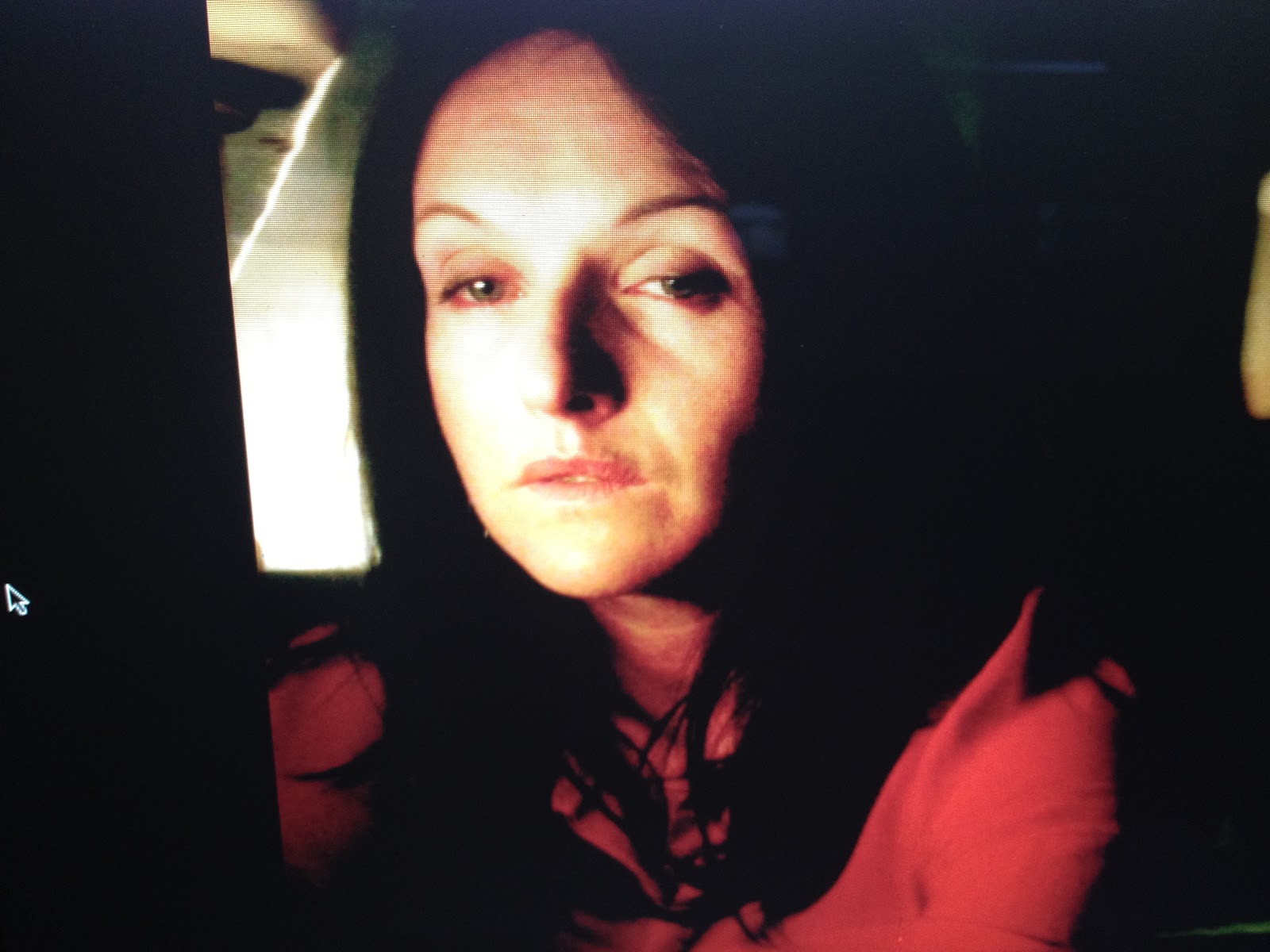
In the first installment of ITV1‘s three part drama The Last Weekend, which aired on Sunday night, this tension was staggering. Indeed, it made any lingering bad-blood between Mark and I seem laughable. The series centers on longtime pals Ian (Shaun Evans) and Ollie (Rupert Penry-Jones), whose closeness violated the university social hierarchy when they met as undergraduates over a decade before; Ollie, a top-class toff with fluffy blonde hair and a whole plum tree in his mouth, went on to become a well-heeled barrister, whilst Ian landed himself a job as a primary school teacher and a clapped out car. The episode saw the now-men meeting up at Ollie’s summer digs and reigniting the hidden enmity that they’d first sparked in halls, and that Ollie had kindled when he wed the woman of Ian’s heart, Daisy (Genevieve O'Reilly). With Ian’s wife Em (Claire Keelan) along for the ride, the guys revived their triathlon tradition and wasted little time in fronting up to one another...behind each other’s backs. 

By the five minute-mark, the show had smashed barriers. Literally. Throughout the episode, Ian broke the fourth wall and narrated the trip from a future, erratic point of view, taking jibes at the apparent joviality of the men’s reunion and eerily hinting at its tragic outcome. Initially, this macabre Ian looked set to be a sticking point; he was commenting on a former, sunnier version of himself, and the discrepancy between Ian-past and Ian-future lacked credibility; how could one man be so buoyant in one frame and so unhinged in the next? By the credits, though, the reconciliation between Ian’s two poles was complete; subtly, swiftly and shrewdly, we saw his cheer evaporate and his sinister side come to the fore. This was one instance of the show’s fluid use of chronology. During others, we were propelled back to the trip being arranged, plunged into Ollie’s graduation party and teased with semi-flashbacks, semi-fantasies of an increasingly unstable Ian. Format-wise, the show was bold enough to be disconcerting but smart enough to tie up any loose ends.
Oblivious to the tension? Daisy and Em party

Pertinent as the plot’s premise might be to all of us who, like myself, have had a Mew-moment, it doesn’t exactly scream titillating on paper; the first episode saw the story’s arc barely getting off the ground and, for the large part, deferred the showdowns to a later date. This week, the episode’s hair-raising capability came not from high-octane drama, but instead from its being an achingly slow-burn. With Ian’s future, sinister self stalking into the shot whenever things got too upbeat and promising trauma before the weekend was up, the action seemed always tantalizingly out of reach. With its format alone keeping things sufficiently piquing, the episode even ventured to mock its own lack of bona-fide action; a knife-wielding teen in the kitchen turned out to be Ollie’s Hooray-Henry son, a table of apparently prying elderlies in the pub were actually looking over the dessert menu, and Ollie’s intoxicated driving went off without a hitch. The writers didn’t need to use up their dramatic stock just yet, when the stifling atmosphere they created had made every triviality an edge-of-your-seater.

When I watched BBC1’s three-parter Blackout, I made much of Alex Demoys’ comparative simplicity as a character when set alongside her husband’s, his mistress’ and her wayward ex’s. It was, I complained at the time, a shame that the writers’ canny ability to carve out complex characters hadn’t benefitted Alex. The Last Weekend, too, had a figure of relative one-dimensionality, this time in the shape of Ian’s wife Em. Unlike Ian’s, her happy-go-lucky attitude didn’t evaporate as she settled into the episode, and whilst Ollie and Daisy’s infuriating airs and graces quickly both rattled and awed her husband (‘Oh look Ollie- Cava!’ ‘Smashing!’), Em remained down-to-earth, ready to giggle at their friends’ snobbery and to raise eyebrows at their secrecy. Far from being drab, though, Em emerged as a sort of audience anchor as the episode wore on: a stronghold of perspective and normality that viewers found empathy for. We, like Em, were baffled and alienated by Ian, and couldn’t decide whether Daisy was a long-suffering, tragic sort of wife or a snobbish and shallow one. That’s not to say that Ollie, by default and through his being a question mark, dragged the episode down either; his outlandish behavior was complemented by Em’s stoicism rather than shown up by it. 
Mixed-up: Ian turned dark as the show progressed

Next Sunday, the series needs to come good on its promise of bust-ups in order to dodge stagnancy; the smell of frying bacon is all well and good, but it needs to be followed by a few butties. The second installment should have little trouble in the drama department, though, if it merely tends to the seeds its predecessor has already sowed. The arrival of Daisy’s ‘client’ Mo at the episode’s close, coupled with Ian’s now unwavering instability and his unnerving determination to bed Daisy, looks set to be particularly explosive (and cleverly intricate, too, if Ian’s resentment for him is mirrored in his maltreatment of a black schoolchild as hinted by the ‘next weeks’). Then there’s Ollie’s claim to have an ‘inoperable’ brain tumor and a recklessness to match, Daisy’s apparent need to speak to Ian on their own and the evasiveness that met Em when she teased the men’s friendship as ‘a bit gay’. Eyes on every space.

Friday, 10 August 2012

Awful...In All the RIGHT Ways: “Blackout” Comes to its Close


I’ve never understood why sinister films tend to make such box-office smashers; just what is it about blubbering one’s way through 123 minutes of “The Notebook” that makes audiences crawl wistfully back time after time? Why do we readily shun perky, sunny summer-flicks, but flock to lugubrious death-tales and moody murders like woe’s going out of style? I’ve checked and, as long as Wintour holds on to her Vogue throne, it isn’t. So it must be something else, some endemic screw-up that evolution never got got a chance to iron out, that gives us all our craving for calamity. I guess, somehow, this sucker for punishment bent has its dividends; if no one ever reverted to what they’ve formerly found bothersome, gyms would certainly lose a hefty chunk of their profit, we’d never eat celery and we’d have lost Cheryl Cole long ago. I’m no novice to the quirk myself; since I signed off on my last “Blackout” post I’ve been itching for a load more of its peculiarly bum-out bleakness, torturing myself with various outcome scenarios and even, once, rereading my previous posts and sorrily basking in the wretchedness of the Beeb’s three-parter. So this week, at long last, I got some much-needed closure on at least one city mayor who will certainly not be merrily dangling from a zip-wire anytime soon...
Betrayed: Demoys' relationship with Durrans soured

What the episode did well, as it panned out, was to make its culmination seem inevitable; its twists came off as unlabored, its eventual tidiness satisfying. Episode three opened with the revelation that Jerry Durrans, the spearhead of Demoys’ mayoral campaign (who had slipped under the net so stealthily in previous episodes that that was the first time I’ve typed his name) knew of Daniel’s grisly murder of businessman Pulis. Corrupt, oily and the father of Daniel’s unborn niece or nephew, a bent Pulis turned out to be in cahoots with the city’s police and with corporate giant Danto, determined to make a puppet of Demoys and derail his designs for cooperatively-operated public services. In one expert maneuver, the series salvaged the tautness that it risked in its sophomore episode and provided a flawless ‘will he/won’t he’ climax for the capricious Demoys. Equally fortunately, the finale unshackled Sylvie from her bunny-boiling, awkward worst; her wearisome obsession with Demoys came to a halt and she sought reconciliation with ex Bevan, who, without debasing one of the episode’s most powerful moments, stepped up to the mark as the series’ chief performer in the chilling stakes. Plot-wise, the sole glitch came with Ruth Pulis; despite an almost Beckham-esque sluggishness in episodes one and two in realising Demoys’ hand in her father’s demise, Ruth of this week seemed razor sharp. So too, Ruth was the one character for whom writers fell short of providing closure. She was, as the end approached with impressive momentum, slightly redundant, but the lack of finality for Ruth was an unnecessary smear on an otherwise gleaming conclusion.
Turnaround: Pulis' daughter realised Demoys' crime

Episode three hurtled along, but it crucially did so without sacrificing poignancy.; indeed, this was the series at its most stirring. The onus on family this week, with Sylvie’s reconciliation with Bevan alone, was striking (‘I have a husband, and I have two kids....and I didn’t even notice’), but with the Demoys it was made centrally-thematic. As Alex and Daniel discerned the net tightening round them, and Demoys’ comeuppance became a mere question of ‘when’, it was almost harrowing to see them put provisions in place for their children (who, by the way, seemed to become as infinitely cuter as Ruth did sharper). The ‘last supper’ template, time-worn by telly dramas in need of a spurt of tension, was used sparingly and with the series’ signature originality. It was dark (fret not, misery-lovers), but the segment afforded surprising tenderness to what was essentially the goodbye-party of a murdering politician. The other prime mushy-moment came when Demoys’ nurse mentor and fellow recovering alcoholic, Donna, turned therapist to his troubled son. As the boys’ insecurities, thankfully, were sidelined, Donna spoke lengthily about the relentless struggle against the bottle and, in so doing, reminded viewers not to go too harshly on Demoys. It was refreshing, perhaps assuring, given how much time was given up to the issue of drink early in the series, to see it brought back up and not trivialized as a mere plot device.
Touching: The episode didn't skimp on the soft-stuff

Without sounding too inane, my biggest bug-bear with dramas tends to be their drama: that is, their borderline-fantasy flourishes and dubious characters. Gladly, and again without tainting the ending, “Blackout” finished with credibility, with a powerful curtain call that, happily, ditched the theatrics. Even prior to the final five minutes, the finale seemed thoroughly, nearly uncomfortably, realistic. The attention to continuity (especially with regards to the booze issue) played its part, but what gave the biggest dose of verisimilitude was the series’ niftily put together characters. People, they seemed to show, change their minds, have alternating work- and home-personas, act occasionally out of emotion rather than rationality, and can be unpredictable without being sensational. In short, the series’ writers refused to work with limiting character categories (the killer, the cutie, the doormat), and in a mere three episodes showcased each key player as multi-dimensioned.

Watch “Blackout’s” finale with a hankering for gloom and it won’t disappoint. Settle down to it with one eye on the bleakness and the other on savvy production, applaudable candidness and deftly used sentiment, and you’ll get doubly lucky.

Wednesday, 1 August 2012

Standing Up “Suburgatory”


Once I’d turned 18 it seemed I couldn’t come within an arm’s distance of a bank cashier without being badgered about “upgrading” my account. Whereas before they’d smiled tenderly, almost paternally, at my kiddies’ savings card, they now plugged credit ratings, overdrafts and honeyed incentives; “it’s the natural next step,” I remember one fervent young assistant telling me, smuggling leaflets into my hands and grinning frenziedly. A fortnight ago I relented, somewhat reluctant to ditch the bright yellow plastic I’d picked up when I was 12, and made an appointment with one of the bank’s advisors. Gratefully, Wendy was noticeably more placid than her juniors out front, managing even to utter the words “current account” without petrifying avidity. As I skimmed a list of rewards (available for just £20 each month), one stuck out as particularly coaxing: phone insurance. Wendy explained that by signing up for an “Ultimate Rewards” package, I’d bag myself the insurance plus a whole host more perks. Redundant, irrelevant perks. There was the unlimited travel insurance (for all the lavish holidays I take as a destitute student...), the home cover (when all my costliest possessions fit, with room to spare, in a rucksack) and the indispensable AA Breakdown Service (the furthest I travel at university being the edge of its pedestrianized campus). Momentarily tempted though I was by the phone cover (my iPhone’s “reinforced” screen proving to be about as sturdy as soggy toilet-tissue), I knew that taking the entire package for its one merit would be moronic. 
So I guess I am, as much as Wendy protested, rather good at knowing when the cons outweigh the pros of a set up, and when to walk away. True to form, after I had to abandon a planned triple-date with brand new E4 sitcom “Suburgatory” this week, I now know the series is a lost cause. The show trails Tessa Altman, a born and bred New Yorker-teen who finds herself hauled to the city’s suburbs when her lone-parent dad, George, uncovers a brand new pack of condoms in her top drawer. Untenable and irrational as his reasoning sounds, I was willing to give the show a go; it’s just been picked up for a second season by American network ABC and performed blazingly with its opening-run ratings.
Just Wanna Have Fun: Dalia and Tessa failed to bond
The pilot was, granted, more than passable. Once you’d gotten past the moth-eaten premise of city-girl going green it was plain to see that someone on the “Suburgatory” writing team had their head screwed on, at least for some of the time. Tessa prevailed as a particular highlight, scoffing cynically at the Stepford Wives of her new neighborhood and raising her shapeless eyebrows at the superficiality of her schoolmates. “Its pretty ironic that a box full of rubbers landed me in a town full of plastic,” she spoofed, before showing her own acid tongue far outstripped her bitchy peers: “I hated Dalia- her personality was as flat as her hair.” Quite the city-cat. George, too, drove the episode on despite showcasing youth and good-looks questionable for a harassed single-parent with a full-time job in architecture. His uneasy easing into suburban life, beginning with a country club breakfast and rounding off with a strained visit to his frisky middle-aged neighbors’, proffered a couple of laughs while Tessa was elsewhere. The pilot’s brightest scripting, as well as its most poster-worthy visuals, came when the pair found themselves on a shopping date with mother-daughter duo Dallas and Dalia Royce. “It’s so lame your mom died, biatch”, Dalia purred as she sized up to a bemused Tessa in the changing rooms, before her equally diplomatic mother gave her say-so on her underwear: “like something a burn victim would wear!” The sequence had its sketchy areas (some trash about “girl 101” only serving to recall the show’s cliched roots), but did fairly well in elevating a watchable pilot into an almost unmissable series. Thus far, the pros were on top.
Proud Parent? George's character survived Episode Two: Tessa's didn't
Perhaps my expectations for episode two were too soaring, but it just didn’t measure up. The show opened with farce, as a slow-mo Tessa and George tried and failed to dodge a dinner invitation from the Shays over the road street. The soiree finished with Tessa being roped into a spot of truth-or-dare (at high school, really?) smooching with Ryan, the elder son of the family and jock dunce of the school corridor, and being struck by her attraction to him. In a heartbeat, every inch of Tessa’s credibility, of her sole aloofness in a suburban hell, was butchered. Five minutes on from Ryan-gate, the formerly cool Tessa was waving obtusely and blushingly from her window as she watched him hose down his car, locking lips with him by the sports field like some bimbo cheerleader and bending the school guidance counsellor’s ear off about how dreamy he was. With Tessa’s fall from grace, the series quickly wound up lacking a chunk of what had set it apart from its similarly-plotted predecessors. Yes, the writing was still smart (“Have you ever seen a foreign film?” “Avatar?”) and Tessa’s reluctance to fall for Ryan’s charms (“An intellectual, neurotic, self-loathing Jew? Much more my type) went someway in mitigating the situation, but her shameful regression was, in the end, beyond salvation. However many nimble one-liners they were interspersed with, the cons just weren’t worth it.
Meanwhile, the episode saw George tied up holding for his new neighbors what he was sagely advised would be the making or breaking of his acceptance into the hum-drum of suburbia: “the barbecue”. Despite his character remaining dependably giggle-worthy, this side story failed pitifully to recompense for Ryan; George’s perma-tanned buddy’s grill, “Sally”, running out of propane was the plot’s most momentous point, and not even George’s comical New York inexperience playing host could make up for that.
What was most maddening for me, as I stood up “Suburgatory” on date number three, was that the series had survived adopting one threadbare formula so well; Tessa and George’s relocation from the city was bedecked with such slick writing that you’d be a fool to hold it against them. Why, having taken such a gamble with the premise, would “Suburgatory’s” producers opt to haul out the timeworn city-girl/small-town boy blueprint so early on? “Suburgatory”: I won’t be calling.

Friday, 27 July 2012

Tangled But Tidy: "Blackout" Gets Complex


“Why’d you have to go and make things so complicated?” Oh Avril, we miss you. We miss you not just for those unashamedly stroppy, post-innocence but pre-student loan days that you’ve come to represent for a whole generation, but we miss you for the lyrical perspicacity that modern pop princesses can only snatch at (“And he ill, he real, he might got a deal, he pop bottles and he got the right kind of bill...” whaaaa?). Even minus the shopping centre skateboarding, Ms Lavigne’s grumbles about complication-frustration hold true a decade on. Case in point: the French-learning fiasco I outlined a few posts back. The first couple of CDs I saw off with pretty impressive alacrity; I thought Rosetta Stone and I were to get on magnificently. Around CD four, though, when the tracks veered away from the basics, things went woefully and flamboyantly wrong: voulezvoulentleteerent wrong. True, I’d achieve precious little on the streets of St Benoit armed only sketchily with the present tense and a flawless readiness to count to dix, but the headache these advanced CDs gave me just wasn’t worth my time (my temps- that was disc three). Of course, extra complexities aren’t always bad news; imagine Harry Potter with no Horcruxes, or the contentedly married Walford-resident without his illegitimate sons: batty. Part two of the Beeb’s three-part drama, “Blackout”, had tons of added intricacies- both the welcome sort and the vexing.
Thankfully, the episode got started with the bulking up of areas that had screamed for attention last time. Alex Demoys, whose overly simplistic characterization I bemoaned in my previous “Blackout” post, finally came to rival the Daniels and the Sylvies that give this series its grit. In an opening scene, as her children marveled at their former vodka-swilling pop having become a mayor with a multi-million pound budget at his command, Alex’s cynicism and envy were palpable; here was a character not just, as last time, content to base her moods around the sobriety of her husband, but a character with her own haul of insecurities. Alex’s newfound selfdom had yet more chance to show itself as she uncovered evidence pointing to Daniel’s involvement in the murder of bent businessman Henry Pulis. Their first confrontation was void of cliched sensationalism and well in-keeping with the brutality and bleakness of the series, but I cringed a little at Alex’s nonchalance towards her husband’s bloodied hands. Gladly, when they later met at a deserted car park and Alex demanded to know every detail of her husband’s crime, her reaction shot up the credibility scale and reignited the idea that she was a substantial character in her own right.
Finding her voice: Alex's development provided one of the episode's highs
You win some, you lose some; Alex’s flowering was a boon, but Sylvie’s place in this episode got more confused each time she flapped her way on screen. Increasingly desperate to meet the man she’d spent a steamy five minutes with before witnessing him do in a suit in the alley out back, Sylvie’s behavior wobbled between grabbingly insecure and wearily unpredictable. She began by trying to merely contact Daniel (fair game) before proclaiming her love for him and breaking down at the nightmares she’d been having (not so fair game). Sylvie rounded off her performance by begging Daniel to just “hold her”, smashing the single mother/independent vixen role she’d gradually carved out for herself in episode one and coming across more like a niggling side-story to the main action.
A heap of Sylvie’s superfluity this week came from the extra dimension afforded to her psychotic ex, Dalien Bevan, since episode one. Last time, he had been the guy to evidence Sylvie’s tough life as a lone parent, obsessed by the idea that she had a new man and determined to put a stopper in any such budding romance. The added depth of this week, however, called him to the fore not just as an appendage of Sylvie but independently of his post as clingy-ex, and saw him extend his meddling and fanatical traits to the main story. As Daniel’s fog lifted and he recalled a homeless man being in the alley as he did away with Pulis, he did all he could to ensure the new witness wouldn’t be the one to give him away to the police, bungling him away in a hotel as he was named as Frank Waters, an official suspect in Pulis’ murder case. When Detective Bevan (literally- he’s a cop, fortunately enough for plot cohesion...) found Waters dead under a bypass, both he and Daniel smelled foul play. “When everything is so good, it must be bad,” Bevan sagely told a freshly conflicted Daniel, as he vowed to get to the bottom of why his police superiors were set on covering up Pulis’ murder and told Demoys their conversation was his insurance should they notice his poking around. It was a brassy move to interweave Daniel’s and Bevan’s interests so thickly, but a move that was carried out deftly and with only limited amounts of viewer head-scratching as a result: a bit of a jumble, granted, but worth getting a hold on.
Fall from grace: Sylvie slipped from interesting to inconsequential
My last “Blackout” post championed Eccleston’s Demoys for his believability and depth, and this week’s episode deserves a nod for maintaining the standard. Plainly, Demoys’ elevation to mayor since week one was going to engender somewhat of a change in his drunk, lousy demeanor, and there was a touch more James Bond than senior hooligan to Daniel from the get go this week; the crisp white shirts, the moral reluctance to let fat-cat businessmen profit from the public purse and the doting daddy part completed the newly spotless look. At no stage though, was Demoys’ shift from lout to local poster boy without plausibility; his ongoing two-facedness with Pulis’ daughter (even jesting at one stage that she might accuse him of murder), his continued alcoholic pangs and his advising Alex how to get herself out of trouble should the cops come knocking all reminded an audience of Daniel’s double-dealing past and still very much active shady character. 
Much more than its predecessor, “Blackout’s” second installment was plot- rather than character-driven, with the Demoys, Sylvie and Bevan developing organically as the story required. Less of an easy watch and more likely to call for the pause button, week two’s episode highlighted just how intricate the drama’s producers are willing to be and hinted at how much more entangled things could get before the final credits roll. I’m hoping next week the producers layer on a couple more twists but, crucially, only do so with the same tidiness and coherence used to entangle Demoys and Bevan. “Why’d you have to go and make things so complicated?” Because they do it so well, Avril.

Thursday, 19 July 2012

Through the Gloom: “Blackout” Episode One


I must have been nine years old when I first became conscious of my own reflection, before I took even a vague interest in chucking on anything that wasn’t Power Ranger- (or, (on a particularly daring day, Pokemon-) inspired. I can be so express with the age because, coincidentally, my elder brother developed appearance-awareness at the same time. It was as if we were jockeying for position in the pre-teen Cooney style-stakes, vying to look the most like a hapless boy-band wannabe and sizing up one another’s wardrobes at the breakfast table like a pair of snooty playground mums. On a Sunday evening that we had obviously put our fashion face-offs aside, we agreed to take a few snips of each other’s hair; David Beckham’s bouncy middle parting was, I can remember, the envy of every remotely style-savvy boy in school and the long fringes my mum had lumbered us with seemed to plead for rapid change. Oliver was, as the cherished firstborn, comparatively conservative in what did with mine. I had a few ugly hacks out the front but it looked pretty swanky compared to what he wound up with. Nine was also the age I learnt of my own extreme heavy-handedness. Rather than a middle parting, I carved a lopsided semi-circle from his fringe and obliterated any hair around his ears for good measure; the breakfast-table style stakes were mine for months on end. After a night’s dressing down from mum, and hours of being told what prized berks we looked like, I dreaded walking through the school gates the next day; I recalled the reaction that met Lucy Johnson’s holiday cornrows fiasco and shuddered. The only thing that got me into the playground that Monday morning was knowing Oliver looked a dam site worse than I did, that my barnet would pail into significance when set alongside the sorry mess I’d left atop his head.
So I guess it really is all relative. As Aesop said, “There is always someone worse off than yourself”, and its a heartening thing to bear in mind. When I caught up with the premiere episode from the Beeb’s three part drama “Blackout”, which concluded this Monday, this comparable optimism hit especially hard. Despite an ailing student bank balance, a summer that tempts me to renounce my UK residency and Amanda Holden being on telly every night this week (thanks a bunch, “Superstar”) I finished the show feeling jolly upbeat about my own state of affairs; compared to Daniel Demoys, upon whom the series centers, I’m on cloud nine. 
Hero or bad guy? Demoys threw himself in the path of a speeding bullet
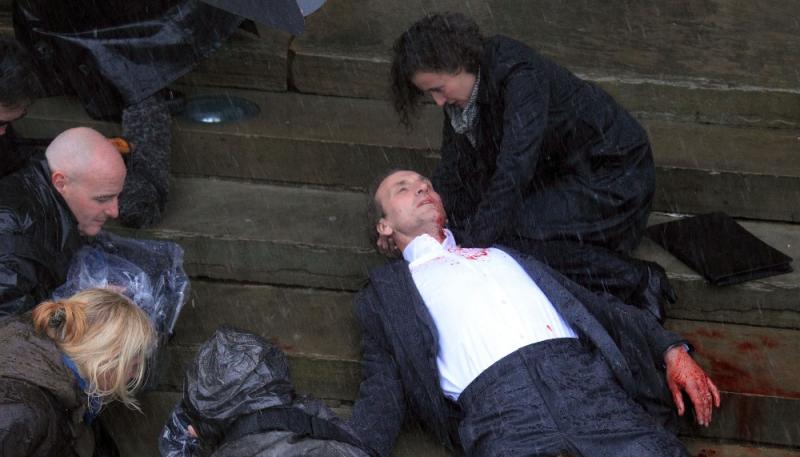
“Blackout” is, funnily enough, out and out black. From the first line, nay, from the first note of the forlorn intro track, right through to the credits, the episode was strikingly morose. The premise of the series is promising; Demoys, a corrupt and alcohol-dependent local council member whose family is crumbling, wakes after a night’s drinking to the news that prominent local businessman Henry Pulis has been attacked and left for dead. Demoys’ memory is blurred, but he remembers tussling with the victim during his stupor and has blood on his clothes; all evidence points towards his culpability. As Demoys grapples with his guilt and seeks out his lawyer little sister, he opts to dive in front of a bullet heading for a whistle-blowing ex-drug user who she is defending. Demoys wakes to find himself a national hero, with the public calling for his mayoral candidacy and his sister in awe. As Pulis’ life ebbs away and Demoys realizes that he was seen laying into the businessman by a blonde he’d just had it off with, he decides to seize upon the upcoming mayoral race as a chance for redemption. Told you it was gritty.
In the dark: Christopher Eccleston as the sombre Demoys
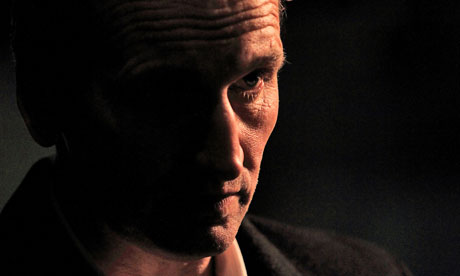
Demoys’ character had the most screen time, but his masterly construction meant we didn’t tire of his somberness one inch. Even when he was swigging spirits and looting documents from the city (undisclosed) hall rather than taking his dutiful audience spot at his daughter’s ballet recital, writers managed to eek Demoys for all the pathos he was worth. As he told his children he wouldn’t be taking them home, it was with a tangibly pained reluctance that endeared him to viewers; the alcoholism and backhanders were, it was subtly made manifest, vices that Demoys had no grip on, and when he had to flee his son’s swimming race because of the onset of a violent flashback involving Pulis sympathy for him reached a crescendo. Critically, when Demoys became celebrated and officials clamored for his candidacy, he remained guilt-ridden and reluctant; “I’m weak, I’m selfish. I’m a coward,” were his protests. Demoys didn’t have that viewer-ostracizing and preposterous turnaround, nor was it possible to see his taking a bullet as a strike of fortune for a man on the brink. He started out, and finished up, as more than a little messed up, self-hating and bitter with his lot. Indeed, my ongoing wrestling over what I want to happen next to Demoys is testament to the skillful way he’s been written. Pitifully remorseful he may have been, but with Pulis’ bereft daughter and Demoys’ own long-suffering wife both onscreen constants, it was strenuous to forget that he may just deserve everything coming to him. 
Complex: Demoys and Sylvie were the episode's standout characters
The episode’s other shining light was the aforementioned blonde, Sylvie: the only character that showcased the show’s writing credentials anywhere near as much as Demoys. Gradually emerging as the episode’s dark horse, Sylvie initially seemed inconsequential and disappeared from the frame for a good twenty minutes before being hauled back in as Demoys remembered more and more of his spat with Pulis and Sylvie’s being privy to it. Thankfully, she wasn’t just used as an appendage of the main man’s story but got her own hardships and hangups to deal with, too; Sylvie was shown not only in her sleazy-bar guise, but also as a single mother with a possessive ex and a grubby conscience. Admittedly this was episode one, but I couldn’t stave off a frustration that Mrs Demoys (the name says enough...) appeared merely as Daniel’s downtrodden wife; clearly, the writers were qualified to sculpt weighty supporting characters without detracting from the episode’s central thread and it was a crying shame that she, unlike Sylvie, didn’t seem to warrant any such attention.
Despite its overwhelming bleakness, the series achieved also a sort of arty, discerning tone that remedied any hints of audience fatigue and made its first episode a whole lot easier to endure. Melancholy becomes somewhat more manageable when its swanky, highbrow melancholy (I’d have ditched about a dozen first-year plays if my tutors hadn’t insisted on their place in the canon). The flashback element played its part here; Demoys’ relentless replaying of Pulis’ “that means I own you, boy” hinted at the total stagnation of his own mind. The constant background presence of the media, too, whether documenting the attack or commentating on Demoys’ rise to heroism, seemed to taunt Daniel as he tried to get his thoughts together and the episode’s part-ballet, part-theft opening segment mocked the baseness of what Demoys had let himself become. Either that or I’ve been studying English for far too long...
In all, “Blackout’s” debut show was complemented rather than despoiled by its gloom and well worth persevering with. Aside from being far more effective than therapy where evoking contentment was concerned, it was sharp, complex and hooking from the off. Episodes two and three are trickling into my iTunes library as I type.

Sunday, 15 July 2012

Swapping Pensions for Paychecks: “The Town That Never Retired”


It is without so much as a moment's hesitation that I would identify myself and my family as out and out, steadfast M&S zealots. The slump in profits reported for the last quarter? Probably just mum taking a holiday. Marks' boons are, to us devotees, endless; its a store where the cafe queues are worth it, a store staffed with the warm and the mumsy rather than students who'd sooner be in bed. It's a store where the sandwiches refuse to sag and the prepared meals don't taste like bubble wrap. And a store for beholding social prejudices, inter-societal relations and implicit stereotyping? Apparently so. Thursday afternoon saw me buying my daily Marks and Sparks lunch and gawking at the exchange taking place at the till to my left. A cotton-haired, feet shuffling, biddy-looking lady had just packed up her gains and the smarty-pants, unctuous young woman serving her (she’s just a drop in the M&S service ocean- we all have our flaws) was dabhandedly rounding things off on her touchscreen till. “Oh! Paying with card madam? No problem at all,” she trilled through an ear-to-ear grin that radiated smarm. “If you just put your card in this little grey box here, it will ask you to confirm the amount you want to pay,” here she actually mimed inserting a card in its slot, “and then enter your secret number, OK? Would you like me to help you with the buttons?” I still cringe. What made the situation worth postponing my lunch, though, was the exquisite response of her aged customer. After fixing the cashier with a look that offered disdain and bafflement in equal measure, she sighed, “Oh, I’ll try the visa first but a lot of shops seem to have a problem with it. £20 cash-back please, and is there any way I can have the points put on my M&S card retrospectively?” 
What the card debacle proved, aside from the imbecility of said sales assistant, is that senseless and underlying ageism is an ever-present part of our culture (did we learn nothing from Arlene Phillips?). Discernibly, time is rife for the Beeb’s new season “When I’m 65”: a host of shows tackling the trials that come with aging and exploring the place of pensioners in today’s Britain. With so many of us having little interaction with extra-familial seniors, the series must dispel the subconscious assumption that pensioners just aren’t worth our time, and that their domains are, naturally, the bingo hall or November news reports about heating bills. Still chortling about the withering retaliation of lady-on-the-till-to-the-left, on Thursday evening I tuned into “The Town That Never Retired”. The show, fronted by Margaret Mountford and Nick Hewer of, initially, “The Apprentice” fame, sent a throng of Preston retirees back into the workplace to see if they could cope with the demands of a 9 ‘til 5 despite having broken the 70-barrier: a piquing premise, and one that actually concerns the future of our industry. As explained at the show’s outset by the head of UK pensions at global firm PwC, thanks to a soaring life expectancy and little chance of the state bearing its brunt, babies born today can look forward to a pension age of 77. Hauling in an expert so early sent a plain message to viewers; this was not a show to poke fun at hapless and outdated slipper-wearers, nor even a passing comment on how ostracized pensioners are by newfangled technologies and practices. This was a show dealing with a nitty-gritty problem; an experiment, the findings of which implicate us all.
From boardroom to building site: Nick and Margaret
That said, the program raised a few giggles early on as the not-for-much-longer-OAPs arrived at their various workplaces. 73 year old former nurse Sheila didn’t bother to stifle her yawns as her officious new practice manager took her through modern surgery guidelines, and then got tickled by her own inability to click a computer mouse. During a mock consultation with a fellow nurse, Sheila offered the medical know-how of yesteryear. “Red wine is good for you,” she affirmed, after telling her would-be patient to limit her alcohol intake to a few glasses a night, more at weekends. Equally deserving of a chuckle was Marie, who headed back into estate agency. Poor M’s first few hours back at work would have been less woeful if she’d not bothered showing up. With hindsight, her biggest error was refusing to drive a manual and thus turning down the helping hand of the firm’s sat-nav equipped cars. Marie got lost, drove the wrong way up a one-way road and then, having reached her destination, breathlessly tried to open the door of the house next door. The rest of the drollery came from Mountford and Hewer, whose BBC reunion earnt the show its hoards of eager viewers desperate for the legendary “The Apprentice” chemistry that just hasn’t been the same since Karen Brady. Whilst Hewer played the cynic, frowning distastefully as only Hewer can and doubting the suitability of the aged to the 21st Century workplace (“I would prefer to eat my own leg than do this on a permanent basis” was a particular corker), Mountford championed the achievements of the show’s participants, beamed when they settled into their roles and sniggered at Nick’s reservations. Crucially, though, producers weren’t tempted to let the notorious pomp and merriment of the Mountford-Hewer duo stand in the way of business; in one segment, the pair visited a doctor to investigate the physical capabilities of plus-65s when they may be involved in manual work, and in another they discussed what rising pension ages will mean for nana-cum-nannys as grandparents will no longer be able to stand in for employed parents. With the early chuckles and a duo now only matched by Holly and Phil (sorry Ant and Dec- “Black or Red” really hurt you), the show injected humor without sacrificing its credibility and subtly made a perturbing problem a trace easier to handle.
Working girls: Barbara was enthused by her placement
The workers themselves were what made the show engrossing until the end. 76 year old Ruth, who was so keen to impress as a waitress that she took to rehearsing silver-service practices even when at home serving tea, stepped forward as one of the show’s exemplary former retirees. Her supervisor, Carlo, was decidedly unenthralled by the idea of a pensioner in his restaurant at the outset of the show and protested old peoples’ inability to “keep up” with his current team, but by the credits was forced to rethink his skepticism. Ruth’s performance was rivaled only by Barbara, who headed back to a chocolate factory. Babs lamented the loss of her old job and seemed set on showing the supermarket who turned a recent job application down that she could more than handle herself as an employee and, recovering from a nasty early setback that saw her upturn a tray of chocolate gingers, eventually won another week’s work from the factory boss. 72 year old Alan, 73 year old George and 71 year old Ray (ah, to be 71 again...) took to the completion of two apartments at a Preston building site with apparent ease; they jeered disbelievingly about plastic piping, seemed wholeheartedly amused with professional equipment (having made a lot of their own by hand) and got only a little irked by the non-stop jobsworth-iness of their supposed supervisors. Critically, the show thwarted the stereotype trap; whilst some of the guinea pigs rose to their callings, some seemed distinctly disinterested in the whole thing. These variations, in spite of the participants’ comparable ages, left the program with  a sort of plausible optimism; in any generation, one would expect the work-confident as well as the work-shy, the adept and the inept, and this lot were no different.
So even if M&S does revert to being no more than a stand-up shop, and I never have the fortune to see any more of lady-on-the-till-to-the-left’s stinging put-downs, “The Town That Never Retired” looks more than able to deliver my Thursdays with a spot of pensioner-power for a few weeks to come. Next week, in fact, may just push the bar even higher, with young talent being set alongside the seniors to see who fares better at work. Again: Arlene Phillips, anyone?

One Line Wonder

Nick (walking up a flight of slippery stairs): This is beastly. Hold on Margaret.

Monday, 9 July 2012

Who Do You Think You Are? Some Kind of “Superstar”?


To celebrate my 17th birthday, my parents gifted me with a 2002 Mini One: 80000 miles, coffee-splattered detail and dicky passenger door. 15 previous lady owners. I remember staring, buoyantly befuddled, at its pedals and dials, nonchalantly twiddling my keys (my keys) and being altogether irked by the presence of L-plates. I snappily signed up for a dozen lessons with the local driving instructor who, fortuitously, as I saw it, used a Mini herself. Lesson One, “Keys”: Jules handed me what I took to be a shiny black whistle until I fathomed that she wanted me to fire up the ignition. Lesson Two, “Indicating”: when she asked me to signal left I clicked on the headlights, right and windscreen wipers would flap frenziedly. Mini, evidently, experiment acutely but principally each time they launch a new model. Each lesson with Jules meant 60 minutes in a tampered-with copy of my own beloved set of bald wheels: a faintly yet discernibly cockeyed version of what I’d reverently studied since bolting down my birthday-cake breakfast. Incremental though the dissemblances were, they hankered my progress no-end. Each time I swapped my threadbare driver’s seat for Jules’ supple leather one I had to remind myself not to be snared by the motors’ likeness and get to grips with Jules’ gearstick as something separate from my own. I hadn’t thought a jot about this sensation for four years until I tuned into ITV1s new talent show “Superstar” on Saturday evening; it embodied that same-but-vexatiously-different quality that I thought I’d bid goodbye when I ditched the provisional.
West End talent show with a twist: "Superstar" offers a bigger prize than its ancestors
The show’s eventual promise is to fill the leading role of Andrew Lloyd Webber’s “Jesus Christ Superstar”, set to embark on an arena tour of the UK later this year. It follows Lloyd Webber’s first few forays into telly territory (“How Do You Solve...” “Any Dream...”) that he has made with the Beeb, to varying degrees of success, since 2006, but sporadically bucks the musical talent-show paradigm. Take Saturday’s premiere: instead of getting things going with what were ostensibly open auditions and a hodgepodge of potential Christs, the opening-night show screened a post-audition callback round in which every contestant was passable. Gone, instantaneously, were the wickedly funny waifs and strays; lost, along with them, the customary gobsmacked-judges shots. The omission of the tone-deafs itself isn’t a sticking point (see “The Voice UK”), but their jarring absence during a show that conforms in listless other ways to the expected X-Factor format certainly is. So too, Lloyd Webber’s weighing up the auditionees via headphones in a side room, emerging only to confer with his lesser-judges (more on them later), struck as senseless. Following their song, the hopefuls were told to await the judges’ verdict backstage: a routine inextricably disassociated with first-rounds on telly talent shows. The format, then, was the T.V. equivalent of Jules’ pointlessly and only superficially updated Mini; it snatched at originality but achieved little more than niggling annoyances.
Out of the spotlight: Andrew spent Saturday backstage
Aside from the ineptitude of the format, though, the show performed pretty well in a swamped genre; its judging panel, particularly, had a Spice Girl-shaped high. Mel C, the only member of the band not to have dabbled in talent shows before now, swerved the awkwardness and inexpertness that too often accompanies novices to judging line-ups. “I think I’d like to bathe in that voice,” she cheekily told one contestant, after telling shop assistant Sam Cassidy that he must disprove her doubts about him in the next round and giggling when a self-proclaimed Spice-fan took to the stage. Mel resisted the temptation to be swayed by her flanking fellow critics, seemed wholeheartedly comfortable dishing out feedback and (critically) wasn’t just there for her glamour, after signing herself up for a role opposite the competition’s victor. Casting director David Grimrod, who has worked listlessly with Lloyd Webber on previous shows, also took to the judging job with skill and upped again the credibility of the lineup. Stage-pro Jason Donovan finished the set but marred his relevance to the show with what were, increasingly, ruefully redundant comments. “You need to be focused. Jesus was focused,” he sagely told a bemused contender, having hitherto offered only “I dunno mate. I really dunno.” Very adroit. Of course, the panel is set to diversify by the time live shows come around with the ever-watchable (if not a little too distantly connected here) Dawn French set to swell the judges’ ranks, so here’s hoping Donovan’s clumsiness will matter even less during shows to come.
Natural: Mel C is the fifth Spice to judge new talent
When filling “the most iconic role of all time”, as the show unashamedly billed it on Saturday, the talent itself is somewhat paramount and the premiere didn’t disappoint. Most notable was the final auditionee of the day, David, who crooned his way through to the next stage more smoothly than his predecessors (and, tellingly, landed himself on Lorraine’s sofa this morning), but he was by no means the runaway star; Rory Wirrell likewise showcased a staggering set of lungs when he belted out one of McCartney’s lesser-known tracks, “Maybe I’m Amazed”, and builder Steve Pipe compensated for his pitiful lack of theatre know-how with his bible-worthy (almost) tones. Jonathan Ansell, of 2004 X-Factor fame and former member of operatic quartet G4, was less lucky when he nailed a performance of “Somebody to Love” (not the Bieber version, I hasten to add) but was told his current obligations to another West End show had hampered an otherwise masterly audition. 
Ansell’s segment, which came about midway through the show, epitomizes a thorny issue that “Superstar”, as a series, will unquestionably have to negotiate if it is to draw audiences back week on week. The show follows a trail of Lloyd Webber shows that, refreshingly, succeeded without the promise of elusive superstardom at the end: a relatively modest stint on broadway was the prize, take it or leave it. Refusing to pledge their contestants long and commercially mammoth careers meant that the Beeb/Lloyd Webber duo did away with the now wearisome artificiality and ostentation that plagues reviews of “The X-Factor” when it returns each August and ensured the silence of cynics to the talent show format. With “Superstar”, however, the coveted role means an arena tour, not a West End jaunt, and the show on Saturday seemed eager to ramp up the drama dial to cohere with its big-promise prize. Cliffhangers sprung up around ad breaks as judges took unrealistic amounts of time to deliver their verdicts, Ansell’s fate was left a blank, contestants only got their answers delivered individually if it suited the editing room and the next phase was marketed as a military-style “Superstar Island”. The show seemed acutely stuck in limbo: should it mimic the theatricality of fellow ITV talent shows, whose end-prizes remain untouchable, or aim for the credibility of Lloyd Webber’s previous programs at the risk of cheapening its trophy? It must settle for one or the other; as competent a judge as she proved herself to be on Saturday, Mel’s likely insistence that “2 Become 1” just isn’t cutting it here.

Last but not least: Could David be the "Superstar"?